Data Model - Technical
Technical entities support the platform itself: extractions, software configuration, imported files, saved filters, processing history and system information.
Extractions
Software
Imported files
Named filters
Processing history
System
API view objects
Details
Extractions
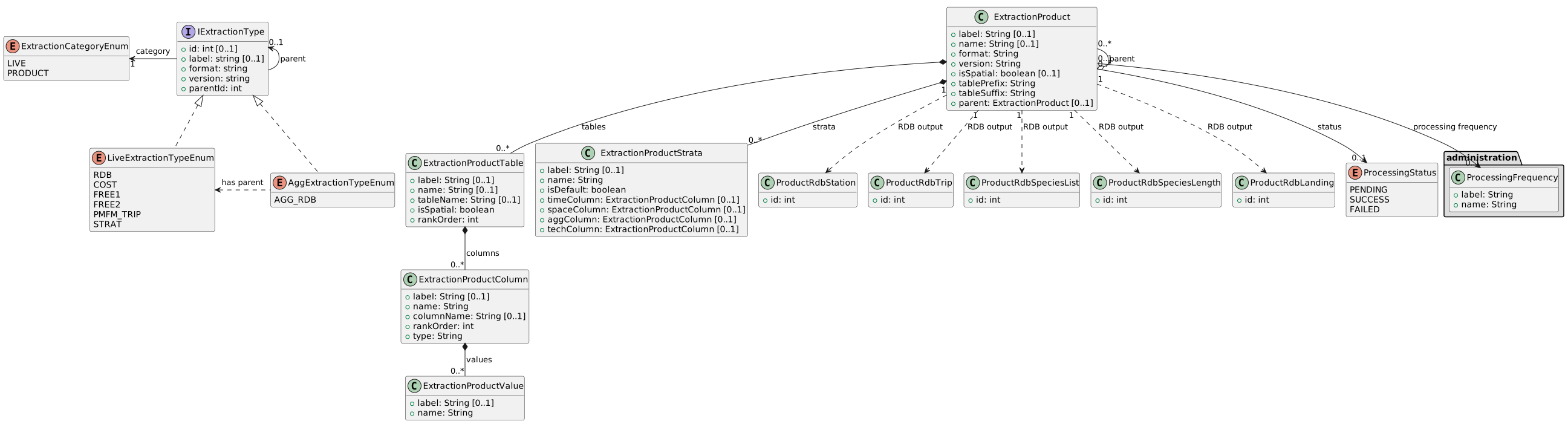
Extraction types (live and aggregated, e.g. RDB tables) and extraction products:
a product defines output tables, columns, values and strata, produced at a given
processing frequency. RDB output tables (ProductRdb*) are pre-composed datasets.
An ExtractionProduct is structured into ExtractionProductTable output tables, each with its
ExtractionProductColumn and optional ExtractionProductStrata and ExtractionProductValue rows.
ProcessingType and ProcessingStatus qualify the processing jobs, run at a given
ProcessingFrequency. The RDB tables (ProductRdbTrip, ProductRdbStation,
ProductRdbSpeciesList, ProductRdbSpeciesLength, ProductRdbLanding) are pre-composed datasets.
Software
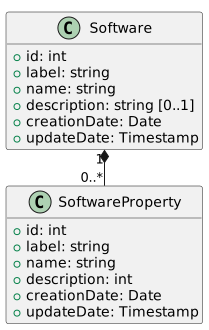
Software instances and their properties.
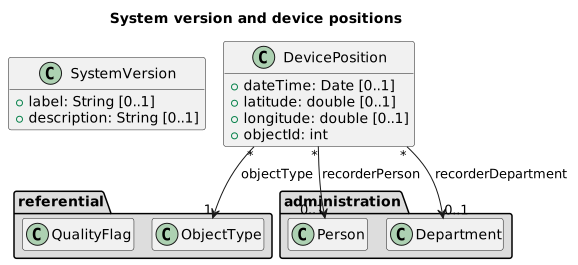
SystemVersion tracks the versions of installed software; SoftwareProperty stores per-software
configuration properties; DevicePosition records the last known position of a device (e.g. a tablet).
Imported files
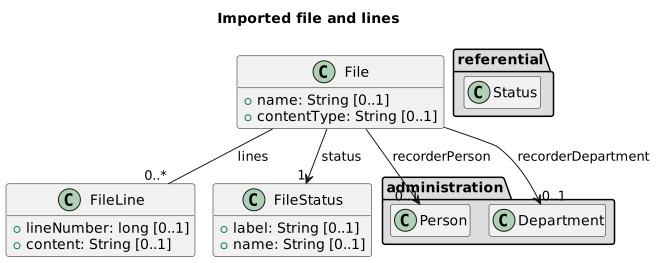
Imported files and their lines, with a status.
A File is composed of FileLine rows, and its import progresses through FileStatus steps.
Named filters
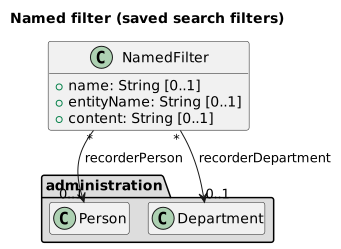
Saved search filters (NamedFilter), owned by a person or department.
Processing history
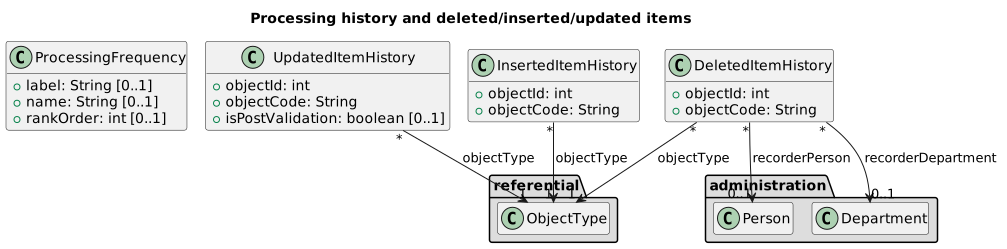
Inserted, updated and deleted item histories, and processing frequencies.
InsertedItemHistory, UpdatedItemHistory and DeletedItemHistory record when an item was
inserted, updated or deleted (and by which user/department), for traceability and synchronization.
System
System versions and device positions (e.g. tablets), typed by object type.
API view objects
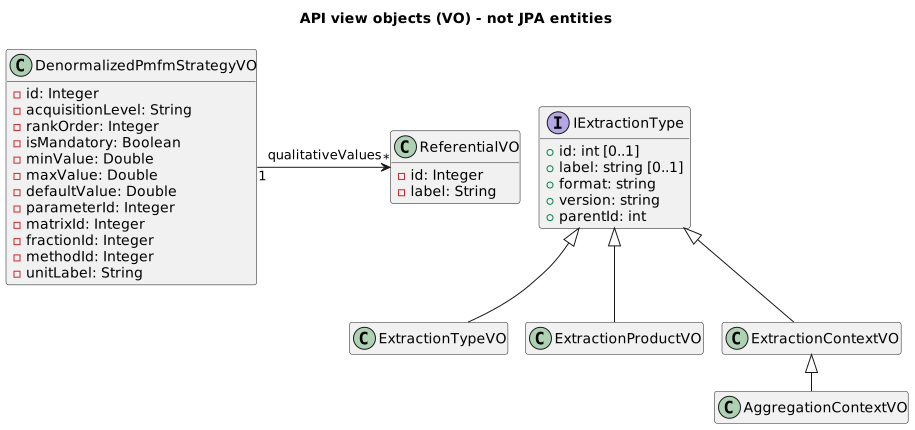
The *VO classes are API/service view objects (DTO-like), not database entities;
they are kept in this separate diagram on purpose.